NEW DELHI, March 12, 2026 /PRNewswire/ -- According to the latest research report published by MarkNtel Advisors, the Quick Commerce Market in the UAE is expected to grow at a CAGR of 3.72% during 2026–2032. The market expansion is primarily supported by the rising demand for ultra-fast delivery services, increasing smartphone penetration, expanding digital retail platforms, and the growing preference for convenient online grocery shopping among urban consumers. The rapid development of app-based delivery ecosystems and investments in logistics infrastructure are further accelerating the growth of quick commerce services across the UAE.

UAE Quick Commerce Market Key Takeaways
Download a FREE PDF Sample of the Report
https://www.marknteladvisors.com/query/request-sample/quick-commerce-market-uae.html (Discover the market potential, emerging technologies, and key industry insights.)
Core Drivers Supporting the Adoption of Quick Commerce Across the UAE
The growing consumer preference for convenience-oriented shopping is a key factor driving the expansion of the UAE Quick Commerce Market. Increasingly, consumers are turning to platforms that provide ultra-fast delivery, typically within 10 to 30 minutes, particularly for essential items such as groceries, beverages, and household supplies.
This trend is further reinforced by the UAE's highly urbanized population and fast-paced lifestyles, where time efficiency has become a critical aspect of daily purchasing decisions. As a result, quick commerce platforms are continuously expanding their product portfolios and strengthening delivery coverage across major urban centers to meet the evolving expectations of modern consumers.
Another major driver of market growth is the widespread adoption of smartphones and digital payment systems across the UAE. Mobile apps and web portals have become the primary channels through which consumers access quick commerce services, enabling users to browse products, place orders, track deliveries in real time, and complete secure digital transactions seamlessly.
In response to the increasing demand for faster and more efficient delivery services, quick commerce providers and retailers are investing heavily in advanced technologies such as AI-driven demand forecasting, route optimization tools, and integrated digital ecosystems. These technological advancements are helping companies enhance operational efficiency while significantly improving the overall customer experience.
The expansion of dark stores and micro-fulfillment centers is also playing a crucial role in supporting the growth of the UAE Quick Commerce Market. These strategically located urban warehouses are specifically designed to facilitate rapid order processing and efficient last-mile delivery.
By positioning inventory closer to high-demand residential areas, companies can significantly reduce delivery times while maintaining high service reliability. This approach enables quick commerce platforms to optimize operational efficiency and consistently deliver on the ultra-fast service timelines that define the quick commerce business model.
Key Challenges Affecting the UAE Quick Commerce Market Growth
Despite its strong growth potential, the UAE Quick Commerce Market faces several operational challenges, particularly related to high infrastructure and logistics costs. Maintaining ultra-fast delivery services requires continuous investments in delivery fleets, dark-store infrastructure, and advanced logistics technologies.
Additionally, companies must effectively manage complexities associated with inventory planning, delivery workforce optimization, and fluctuating consumer demand. Nevertheless, ongoing advancements in automation, predictive analytics, and route optimization technologies are expected to gradually enhance operational efficiency, enabling companies to address these challenges while sustaining long-term market growth.
Market Analysis by Category and Distribution Channel
By category, Grocery & Essentials dominated the UAE Quick Commerce Market with around 45% share in 2026, largely driven by the frequent purchasing behavior associated with everyday household needs. Consumers increasingly prefer quick delivery services for items such as fresh groceries, packaged foods, beverages, and basic household supplies, as these products require regular replenishment. The ability of quick commerce platforms to deliver these necessities within minutes has significantly enhanced their appeal among urban consumers with busy lifestyles. Moreover, companies are continuously expanding their product assortments to strengthen customer retention and order frequency. Alongside groceries, food & beverages and pharmaceuticals & personal care categories are also gaining momentum as platforms diversify their offerings to meet evolving consumer preferences.
By distribution channel, web portals and mobile apps held the largest share of the UAE Quick Commerce Market in 2026, reflecting the country's strong digital ecosystem and high smartphone penetration. Consumers increasingly rely on app-based platforms for seamless ordering, real-time delivery tracking, and secure digital payment options. These digital channels enable quick commerce providers to streamline order management while improving customer convenience and accessibility. In addition, retailers and delivery platforms are integrating advanced technologies into their digital interfaces to enhance operational efficiency and personalize the shopping experience. As digital adoption continues to rise, online platforms are expected to remain the primary channel supporting the expansion of quick commerce services across the UAE.
View Full Report (All Data, In One Place)
https://www.marknteladvisors.com/research-library/quick-commerce-market-uae.html (Explore in-depth analyses, technology trends, and investment opportunities.)
Strategic Platform Expansions and Ultra-Fast Delivery Innovations Reshaping the UAE Quick Commerce Landscape
The UAE quick commerce ecosystem is witnessing rapid transformation as leading digital platforms and e-commerce companies expand their ultra-fast delivery capabilities and strengthen last-mile logistics networks. These developments reflect the increasing competition among market participants to capture rising consumer demand for instant delivery services and digitally integrated retail experiences.
In 2025, Careem expanded its service portfolio in Sharjah, introducing offerings such as Careem Food, Careem Box for courier services, and Home Services including laundry, cleaning, and beauty solutions. As part of this expansion, the company also announced the upcoming launch of Careem Quik, a 15-minute quick-commerce delivery service designed to provide groceries and electronics through ultra-fast delivery. This initiative highlights Careem's broader strategy to strengthen its last-mile delivery ecosystem while expanding its presence within the UAE's rapidly evolving quick commerce sector.
Further intensifying competition in the market, Amazon introduced Amazon Now in the United Arab Emirates during 2025, initially covering major urban centers such as Dubai and Abu Dhabi. The service offers ultra-fast delivery of everyday essentials within approximately 15 minutes, supported by a network of neighborhood micro-fulfillment centers. Through this infrastructure, the platform enables rapid delivery of groceries, personal care products, electronics, and household items. The launch marks Amazon's strategic entry into the region's fast-growing quick commerce segment, reinforcing the broader industry shift toward instant delivery solutions and technology-driven retail logistics.
Major Quick Commerce Companies in the UAE
Key companies operating in the UAE Quick Commerce Market include:
UAE Quick Commerce Market Scope
By Category: Food & Beverages, Grocery & Essentials, Pharmaceuticals & Personal Care, Household & Electronics, Others (Pet Supplies, Flowers, etc.)
By Distribution Channel: Web Portal & Mobile Apps, Supermarkets & Hypermarkets, Online Grocery & Essentials, Specialty & Convenience Stores
By End User: Urban Population, Suburban & Rural, Corporate & Institutional
Browse More reports on Quick Commerce
Global Quick Commerce Market: The Global Quick Commerce Market is projected to grow at a CAGR of around 42% during the forecast period, i.e., 2022-27.
India Quick Commerce Market: The India Quick Commerce Market is projected to grow at a CAGR of around 67% during the forecast period, i.e., 2025-30.
Saudi Arabia Quick Commerce Market: The Saudi Arabia Quick Commerce Market size is valued at around USD 293 million in 2025 and is projected to reach USD 1029 million by 2032. Along with this, the market is estimated to grow at a CAGR of around 19.66% during the forecast period, i.e., 2026-32.
Saudi Arabia E-Commerce Market: The Saudi Arabia E-Commerce Market size was valued at around USD 15 billion in 2024 and is projected to reach USD 29 billion by 2030. Along with this, the market is estimated to grow at a CAGR of around 12% during the forecast period, i.e., 2025-30.
Peru E-Commerce Market: The Peru E-Commerce Market is valued at around USD 15.3 billion in 2023 and it is estimated to grow at a CAGR of about 26.5% during the forecast period, i.e., 2024-30.
Global B2C E-commerce Market: The Global B2C E-commerce Market size is valued at around USD 5.8 Trillion in 2023 and is projected to grow at a CAGR of around 11.5% during the forecast period, i.e., 2024-30.
About MarkNtel Advisors
MarkNtel Advisors is a leading market research and consulting firm dedicated to delivering reliable, data-driven insights across a wide range of global industries. The firm combines extensive primary research, including interviews with industry experts and key stakeholders, with thoroughly validated secondary data to ensure accurate and credible market intelligence. Backed by deep sector expertise and a team of experienced analysts, MarkNtel Advisors provides strategic insights that help businesses, investors, and decision-makers understand evolving market dynamics. Through comprehensive research methodologies and forward-looking analysis, the company supports organizations in identifying growth opportunities and making informed decisions in increasingly competitive and rapidly changing market environments.
Contact Us:
MarkNtel Advisors
Office No.109, H-159, Sector 63, Noida, Uttar Pradesh – 201301, India
Contact No: +91 87199 99009
Email: sales@marknteladvisors.com
Website: marknteladvisors.com
Logo: https://mma.prnewswire.com/media/2687299/MarkNtel_Advisors_Logo.jpg

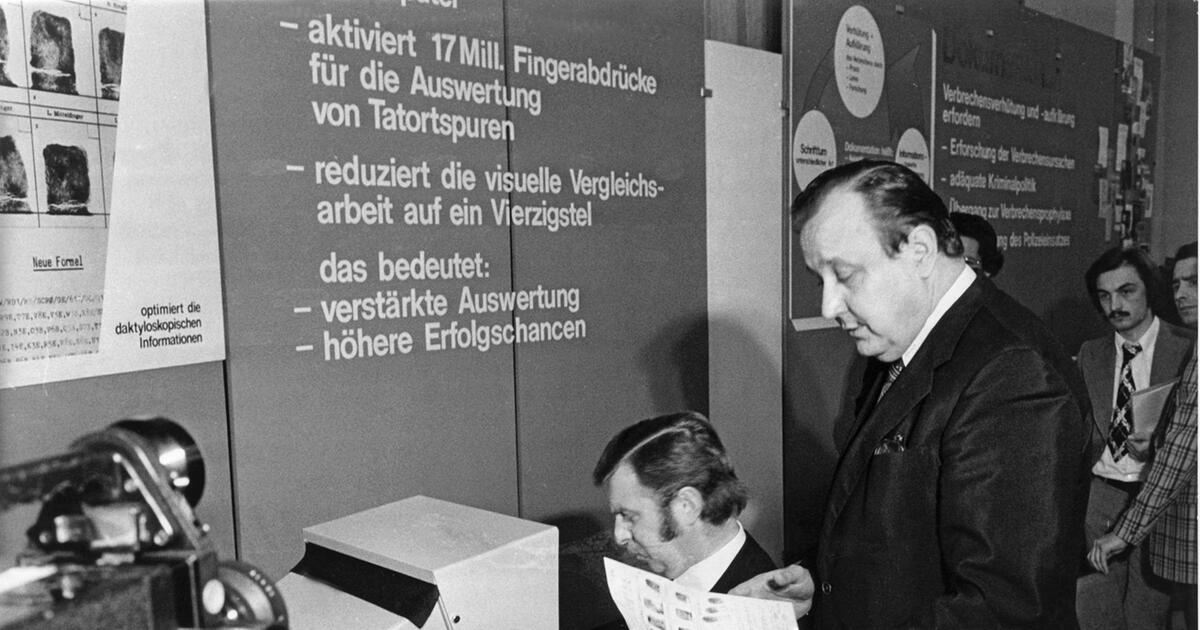
Zum 75. Jahrestag des Bundeskriminalamts (BKA) stellt Präsident Holger Münch die IT-Strategie der Behörde unter das Leitmotiv der digitalen Souveränität. Das Amt wolle vorhandene Daten für Ermittlungen deutlich besser nutzbar machen, ohne sich dabei in die Abhängigkeit einzelner ausländischer IT-Anbieter zu begeben, sagte Münch der Deutschen Presse-Agentur. In einer Zeit, in der Abhängigkeiten gezielt ausgenutzt werden könnten, müsse genauer geprüft werden, welche Produkte man einkauft und welche Fähigkeiten im eigenen Haus aufgebaut werden, so der BKA-Chef.
Im Zentrum steht für Münch nicht nur die Hoheit über die eigenen Daten, sondern auch die wirtschaftliche und politische Unabhängigkeit von Herstellern. Als Risiko nennt er etwa drastische Erhöhungen von Lizenzgebühren. IT-Fachleute verweisen darüber hinaus auf die wachsende Sorge, politischer Druck könne sich eines Tages in Form gesperrter Zugänge zu Daten oder sogar einer Fernabschaltung von Software durch US-Anbieter äußern. Vor diesem Hintergrund gewinnt die Frage, wie Ermittlungsbehörden ihre technischen Grundlagen gestalten, an strategischer Bedeutung.
Ein prominentes Beispiel für die Debatte ist der US-Anbieter Palantir. Dessen Analyseplattform "Gotham" wird bereits in mehreren Bundesländern eingesetzt, darunter Bayern, Hessen, Nordrhein-Westfalen und Baden-Württemberg. Der Hersteller betont, die Datenhoheit verbleibe vollständig bei den jeweiligen Polizeibehörden. Auf Bundesebene signalisiert Bundesinnenminister Alexander Dobrindt (CSU) jedoch nach Darstellung Münchs derzeit kaum Bereitschaft, diese Software für die Bundessicherheitsbehörden zu nutzen. Damit rückt ein eigenständiger Ansatz in den Fokus, der nicht auf eine einzige Komplettlösung setzt.
Münch beschreibt als Zielbild eine IT-Landschaft, die aus verschiedenen Modulen unterschiedlicher Entwickler besteht. Kernstück soll eine Datenintegrationsschicht sein, die das BKA am Markt einkauft. Auf dieser Ebene sollen dann unterschiedliche Analysewerkzeuge laufen – teils bereits vorhandene Systeme, teils Eigenentwicklungen und ergänzend zugekaufte Tools. Erst eine solche Architektur ermögliche es, bislang getrennt vorliegende Informationen aus verschiedenen „Töpfen“ gemeinsam auszuwerten und für operative Ermittlungen nutzbar zu machen. Für die Strafverfolger geht es damit um mehr als reine Effizienzgewinne: Die technische Infrastruktur wird zum zentralen Baustein, um Handlungsfähigkeit und Unabhängigkeit der Behörde langfristig zu sichern.

 View original content: