LONDON, March 10, 2026 /PRNewswire/ -- A new global study from Hexagon, the global leader in measurement technologies, reveals wide differences in how people around the world feel about robotics. The Robot Generation research, spanning nine major markets and 18,000 participants, finds that anxieties about robots are most acute where they are least visible in everyday life.
Across nine major markets, the UK ranks highest in robot anxiety, with 52% of adults saying they feel worried that something might go wrong when they think about interacting with or working alongside robots. By contrast, South Korean adults report the lowest anxiety, at just 29%.
Robot anxiety league table
% of adults who say "I feel worried (something might go wrong)" describes how they feel when thinking about robots
The study suggests anxiety levels are closely correlated with exposure to robots in everyday life. For example, British adults are the least likely to have seen or used robots in real life (30%) and are the most worried (52%). Interestingly, when asked about AI, 61% of UK adults admitted to having used it in the past three months, and 56% said they consider AI chatbots to be robots. This suggests anxiety levels spike when people think about physical AI, rather than software-based technologies, which have become embedded in day-to-day life.
Meanwhile, Chinese adults are the most likely to have seen or used robots (75%) and are also the most excited about their future potential (81%). In China, 90% of adults have used AI in the past three months, and 76% of adults consider AI chatbots 'robots'.
Robot anxiety is context-dependent
The findings strongly suggest that people are not broadly "anti-robot". Instead, attitudes are closely tied to place and task. Comfort levels rise sharply when robots are seen as solving clear, practical problems.
For this reason, adults are most comfortable with robots in factories and warehouses (63%, compared with 46% who are comfortable with robots in the home or 39% in classrooms), where tasks are well defined, and safety standards are well understood. Support is also strongest for robots that take on dangerous or physically demanding work, with half of respondents citing improved safety (50%) and productivity (51%) as the main benefits for robots in these contexts.
Interestingly, this suggests that the popular assumption that people are most worried about job losses or machines "going rogue" isn't the public's top concern. Instead, the biggest source of anxiety is security.
When asked what worries them most about the growing use of robots at work, a majority of adults (51%) cited the risk of robots being hacked or misused, putting data and systems at risk. This outranks concerns about physical malfunction or harm (41%) and job replacement (41%).
The keys to reducing robot anxiety
According to Hexagon, the findings point to a clear path for building public trust: visibility, purpose, and control.
"People are not having a single abstract debate about 'robotics,'" said Burkhard Boeckem, CTO at Hexagon. "They are making practical judgments about where robots, in all their form factors, belong, what they should do, and how securely they are governed. Anxiety grows where robots feel invisible, poorly understood, or out of human control."
The study suggests that robot anxiety falls when people can see robots working safely alongside humans, doing clearly defined jobs, with strong safeguards around data and decision-making.
"Trust is built through experience and clear boundaries," Boeckem added. "When people understand what robots are for, and what they are not, confidence follows."
Trust
"It's not just 'do you trust AI?' It's which tool, used for what? A robot helping children learn is very different from an AI system used in defence, even though we often talk about them as the same thing." Said Dr Jim Everett, Associate Professor in Moral Psychology. "What you want to foster is appropriate trust, or appropriate reliance, where people clearly understand when a system is useful and when they should be cautious."
"When people actually meet a robot, especially a small, friendly one, the fear often disappears. You can almost hear them think, 'Oh, that's not going to take over the world.' Exposure changes the conversation very quickly." Said Michael Szollosy, Research Fellow in Robotics. "If scientists and engineers want people to come with them on this journey, they have a responsibility to explain why these technologies exist and what they're actually for. If you don't take people with you, the counter-narrative sticks and once that happens, it's very hard to undo."
Methodology:
The Hexagon Robot Generation study surveyed 9000 adults and 9000 children aged 8–18 across the USA, UK, Germany, Switzerland, Japan, South Korea, China, Brazil and India. The survey was carried out by Vitreous World on behalf of Hexagon between Oct – Nov 2025.
'Robot' in this context means a machine that can carry out tasks either completely on its own or with human guidance. These tasks could be pre-programmed or the robot could be acting independently. Robots can be found in many forms — for example, machines that build products, deliver goods, or help at home. They don't always look like people.
About Hexagon:
Hexagon is the global leader in measurement technologies. We provide the confidence that vital industries rely on to build, navigate, and innovate. From microns to Mars, our solutions ensure productivity, quality, safety, and sustainability in everything from manufacturing and construction to mining and autonomous systems.
Hexagon (Nasdaq Stockholm: HEXA B) has approximately 24,800 employees in 50 countries and net sales of approximately 5.4bn EUR.
Learn more at hexagon.com.
FOR MORE INFORMATION, CONTACT:
Carla Gutierrez, Senior Director, Communications, media@hexagon.com
Harriet Funston, Senior Account Director, MikeWorldWide (MWW), hmasters@mww.com
 View original content:https://www.prnewswire.co.uk/news-releases/robot-anxiety-is-highest-where-robots-are-least-visible-new-global-study-from-hexagon-finds-302706654.html

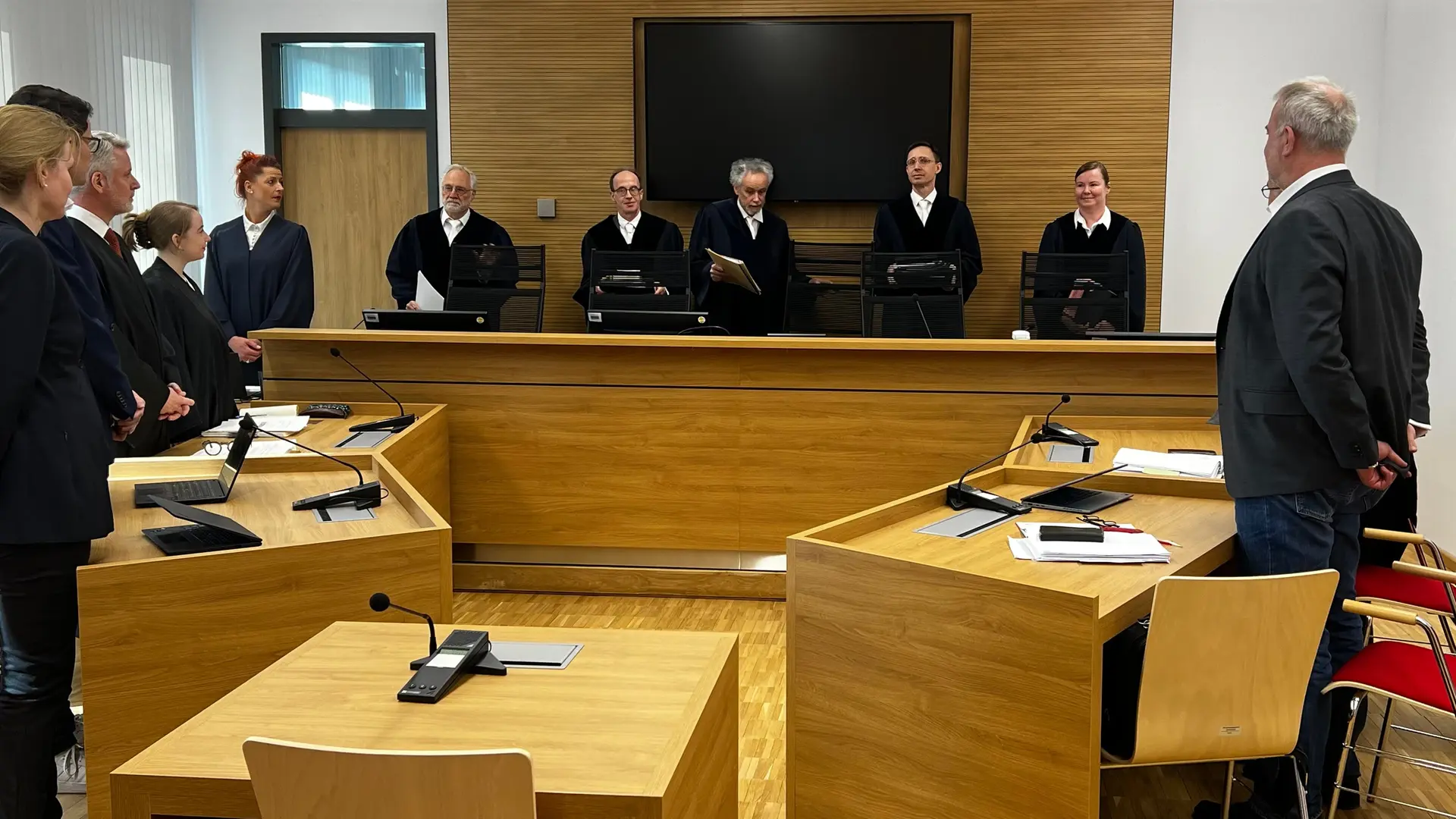
Die weitreichende Sonntagsöffnung in vielen Urlaubsorten Mecklenburg-Vorpommerns steht vor einem grundlegenden Neustart. Das Oberverwaltungsgericht (OVG) Greifswald hat die seit 2025 geltende Bäderregelung für unwirksam erklärt. Die Richter kamen zu dem Schluss, dass die Landesverordnung den verfassungsrechtlich geschützten Sonntagsschutz überdehnt, weil sie zu vielen Geschäften an zu vielen Sonntagen die Öffnung erlaubt. Damit folgte das Gericht der Klage der Dienstleistungsgewerkschaft Verdi, die eine Aushöhlung des arbeitsfreien Sonntags moniert hatte.
Die gekippte Regelung sollte Händlern in den touristischen Orten des Nordostens ähnliche Wettbewerbsbedingungen sichern wie im benachbarten Schleswig-Holstein, mit dem Mecklenburg-Vorpommern um Feriengäste konkurriert. Sie ermöglichte Ladenöffnungen in 84 als touristisch definierten Orten an einem großen Teil der Sonn- und Feiertage im Jahr. Aus Sicht des Gerichts ging der Ausnahmetatbestand damit zu weit: Wenn Geschäfte an zwei von drei Sonntagen sowie zusätzlich an mehreren Feiertagen öffnen dürfen, liege faktisch keine begrenzte Ausnahme mehr vor, sondern eine weitgehende Aufweichung des grundsätzlichen Verkaufsverbots.
Gewerkschaften begrüßten den Richterspruch als Stärkung des Arbeitnehmerschutzes. Verdi hatte argumentiert, dass Beschäftigten im Handel bei einer so weitgehenden Sonntagsöffnung zu wenig Zeit für Familienleben und Erholung bleibe. Auch der Deutsche Gewerkschaftsbund Nord kritisierte die bisherige Bäderregelung als Motor für zusätzliche Sonntagsarbeit und als Instrument, das bewährte Schutzmechanismen unterlaufe und soziale Ungleichheiten verschärfe. Kirchen spielten in der öffentlichen Debatte im stark säkular geprägten Bundesland eine deutlich geringere Rolle.
Unternehmerverbände und Vertreter der Tourismuswirtschaft hingegen warnen vor Verunsicherung. Gerade in klassischen Feriendestinationen, in denen der Einzelhandel stark auf saisonale Gästeumsätze angewiesen ist, galt die Sonntagsöffnung als wichtiger Baustein des Geschäftsmodells. Für die betroffenen Orte ändert sich kurzfristig dennoch wenig: Bis zur Rechtskraft des Urteils dürfen die Geschäfte vorerst weiter nach den bisherigen Vorgaben öffnen. Die Landesregierung in Schwerin will die schriftliche Urteilsbegründung abwarten und prüft nach eigenen Angaben eine Beschwerde beim Bundesverwaltungsgericht – und damit die Chance, die Reichweite künftiger Ausnahmen vom Sonntagsschutz neu auszuloten.



,regionOfInterest=(955,281)&hash=27c131b7533e2d4916860cc04ae4112762ad11c6c6490fc505e779e190a65bcd)