DELRAY BEACH, Fla., March 5, 2026 /PRNewswire/ -- According to MarketsandMarkets, "Polyoxymethylene Market by Type (Homopolymer, Copolymer), Processing Techniques (Injection Molding, Extrusion, Compression Molding), Grade, End-use Industry, and Region - Global Forecast to 2030", The polyoxymethylene market is projected to be valued at USD 3.73 billion in 2025 and USD 4.64 billion in 2030, registering a CAGR of 4.51% during the forecast period.

Download PDF Brochure: https://www.marketsandmarkets.com/pdfdownloadNew.asp?id=126414942
Polyoxymethylene Market Size & Forecast:
• Market Size Available for Years: 2021-2030
• 2025 Market Size: USD 3.73 billion
• 2030 Projected Market Size: USD 4.64 billion
• CAGR (2025-2030): 4.51%
Polyoxymethylene Market Trends & Insights:
Browse in-depth TOC on "Polyoxymethylene Market"
340 - Tables
61 - Figures
280 - Pages
Request Sample Pages : https://www.marketsandmarkets.com/requestsampleNew.asp?id=126414942
The polyoxymethylene market is expected to grow due to the increase in demand for high-performance engineering plastics in automotive, industrial, and electrical applications. The trends of increasing metal replacement and the expansion of electric cars favor the use of polyoxymethylene.
By grade, the low friction segment accounted for the second-largest market share in 2024.
The low friction segment recorded the second-highest market share in 2024. This grade is used in the movement and sliding of components in large numbers. Automobiles, industrial machinery, and consumer appliances are among the industries that use low friction polyoxymethylene gears, bearings, bushings, and sliders to minimize wear and noise. This grade enhances the efficiency and service life of the components without external lubrication.
By processing technique, the extrusion segment accounted for the second-largest market share in 2024.
The extrusion segment had the second-largest share of the overall polyoxymethylene market in 2024. Extrusion is widely used to manufacture rods or sheets, pipes, and profiles of similar sizes. Cost efficiency and the ability to work around-the-clock make it popular in industrial applications.
By type, the homopolymer segment accounted for the second-largest market share in 2024.
The homopolymer segment had the second-largest share of the polyoxymethylene market in 2024. Homopolymers are more rigid, stronger, and have greater fatigue tolerance than copolymers. These characteristics render them applicable in precision parts in which high mechanical performance is needed.
Europe accounted for the second-largest share of the polyoxymethylene market in 2024
Europe accounted for the second-highest market share in 2024. The market in the region is driven by its strong automotive and industrial manufacturing capabilities. There is significant incorporation of engineering plastics in precision components to meet high-quality requirements. Constant emphasis on lightweighting and sustainability also promotes polyoxymethylene consumption.
Request Customization:
https://www.marketsandmarkets.com/requestCustomizationNew.asp?id=126414942
Kay Players
The polyoxymethylene market comprises major players, such as Celanese Corporation (US), Daicel Corporation (Japan), Mitsubishi Gas Chemical Company, Inc. (Japan), BASF (Germany), and others. Product launches, expansions, acquisitions, and restructuring are major strategies these key players adopt to enhance their positions in the polyoxymethylene market.
Get access to the latest updates on Polyoxymethylene Companies and Polyoxymethylene Market Size
Browse Adjacent Market: Specialty Chemicals Market Research Reports & Consulting
Related Reports:
Data Center Liquid Cooling Fluids Market - Global Forecast to 2032
Mold Release Agents Market - Global Forecast to 2030
Ethylene Carbonate Market - Global Forecast to 2032
Specialty Oilfield Chemicals Market - Global Forecast to 2030
Antiscalants Market - Global Forecast to 2029
About MarketsandMarkets™
MarketsandMarkets™ has been recognized as one of America's Best Management Consulting Firms by Forbes, as per their recent report.
MarketsandMarkets™ is a blue ocean alternative in growth consulting and program management, leveraging a man-machine offering to drive supernormal growth for progressive organizations in the B2B space. With the widest lens on emerging technologies, we are proficient in co-creating supernormal growth for clients across the globe.
Today, 80% of Fortune 2000 companies rely on MarketsandMarkets, and 90 of the top 100 companies in each sector trust us to accelerate their revenue growth. With a global clientele of over 13,000 organizations, we help businesses thrive in a disruptive ecosystem.
The B2B economy is witnessing the emergence of $25 trillion in new revenue streams that are replacing existing ones within this decade. We work with clients on growth programs, helping them monetize this $25 trillion opportunity through our service lines – TAM Expansion, Go-to-Market (GTM) Strategy to Execution, Market Share Gain, Account Enablement, and Thought Leadership Marketing.
Built on the 'GIVE Growth' principle, we collaborate with several Forbes Global 2000 B2B companies to keep them future-ready. Our insights and strategies are powered by industry experts, cutting-edge AI, and our Market Intelligence Cloud, KnowledgeStore™, which integrates research and provides ecosystem-wide visibility into revenue shifts.
MarketsandMarkets™ SalesPlay is an AI-driven Revenue Intelligence Co-Pilot designed to help revenue teams prioritize the right accounts, identify critical changes early, and surface opportunities ahead of demand, so pipeline builds naturally and deals close with greater consistency.
To find out more, visit www.MarketsandMarkets™.com or follow us on Twitter , LinkedIn and Facebook .
Contact:
Mr. Rohan Salgarkar
MarketsandMarkets™ INC.
1615 South Congress Ave.
Suite 103, Delray Beach, FL 33445
USA: +1-888-600-6441
Email: sales@marketsandmarkets.com
Visit Our Website: https://www.marketsandmarkets.com/
Logo: https://mma.prnewswire.com/media/1868219/MarketsandMarkets_Logo.jpg
 View original content:https://www.prnewswire.co.uk/news-releases/polyoxymethylene-market-worth-4-64-billion-in-2030---exclusive-report-by-marketsandmarkets-302705033.html

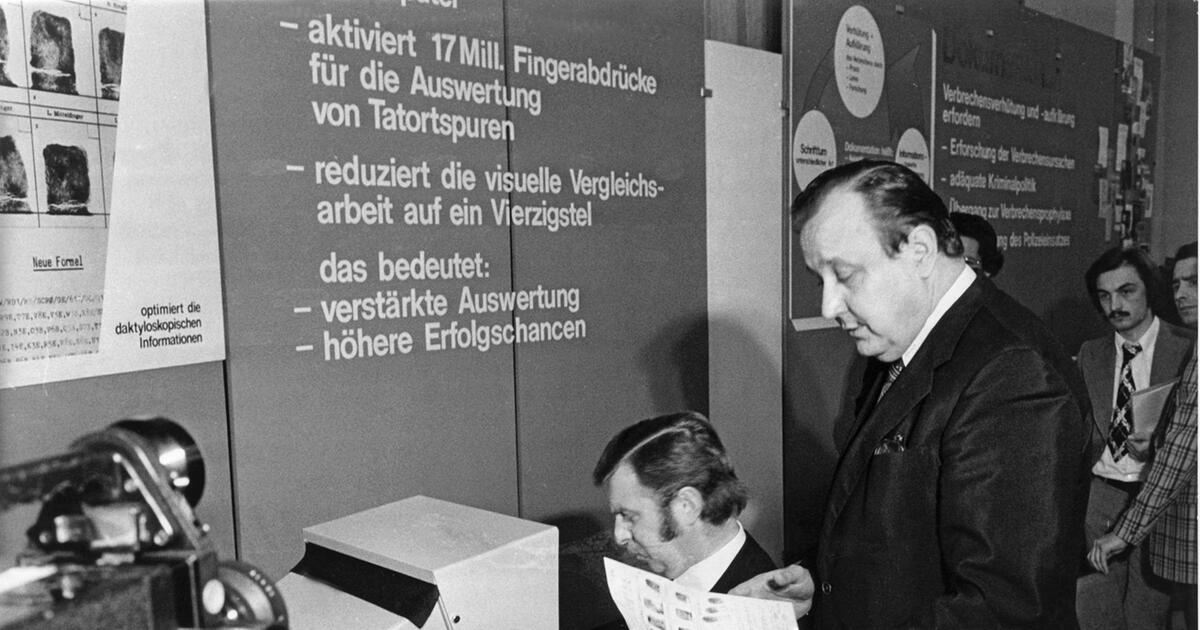
Zum 75. Jahrestag des Bundeskriminalamts (BKA) stellt Präsident Holger Münch die IT-Strategie der Behörde unter das Leitmotiv der digitalen Souveränität. Das Amt wolle vorhandene Daten für Ermittlungen deutlich besser nutzbar machen, ohne sich dabei in die Abhängigkeit einzelner ausländischer IT-Anbieter zu begeben, sagte Münch der Deutschen Presse-Agentur. In einer Zeit, in der Abhängigkeiten gezielt ausgenutzt werden könnten, müsse genauer geprüft werden, welche Produkte man einkauft und welche Fähigkeiten im eigenen Haus aufgebaut werden, so der BKA-Chef.
Im Zentrum steht für Münch nicht nur die Hoheit über die eigenen Daten, sondern auch die wirtschaftliche und politische Unabhängigkeit von Herstellern. Als Risiko nennt er etwa drastische Erhöhungen von Lizenzgebühren. IT-Fachleute verweisen darüber hinaus auf die wachsende Sorge, politischer Druck könne sich eines Tages in Form gesperrter Zugänge zu Daten oder sogar einer Fernabschaltung von Software durch US-Anbieter äußern. Vor diesem Hintergrund gewinnt die Frage, wie Ermittlungsbehörden ihre technischen Grundlagen gestalten, an strategischer Bedeutung.
Ein prominentes Beispiel für die Debatte ist der US-Anbieter Palantir. Dessen Analyseplattform "Gotham" wird bereits in mehreren Bundesländern eingesetzt, darunter Bayern, Hessen, Nordrhein-Westfalen und Baden-Württemberg. Der Hersteller betont, die Datenhoheit verbleibe vollständig bei den jeweiligen Polizeibehörden. Auf Bundesebene signalisiert Bundesinnenminister Alexander Dobrindt (CSU) jedoch nach Darstellung Münchs derzeit kaum Bereitschaft, diese Software für die Bundessicherheitsbehörden zu nutzen. Damit rückt ein eigenständiger Ansatz in den Fokus, der nicht auf eine einzige Komplettlösung setzt.
Münch beschreibt als Zielbild eine IT-Landschaft, die aus verschiedenen Modulen unterschiedlicher Entwickler besteht. Kernstück soll eine Datenintegrationsschicht sein, die das BKA am Markt einkauft. Auf dieser Ebene sollen dann unterschiedliche Analysewerkzeuge laufen – teils bereits vorhandene Systeme, teils Eigenentwicklungen und ergänzend zugekaufte Tools. Erst eine solche Architektur ermögliche es, bislang getrennt vorliegende Informationen aus verschiedenen „Töpfen“ gemeinsam auszuwerten und für operative Ermittlungen nutzbar zu machen. Für die Strafverfolger geht es damit um mehr als reine Effizienzgewinne: Die technische Infrastruktur wird zum zentralen Baustein, um Handlungsfähigkeit und Unabhängigkeit der Behörde langfristig zu sichern.