In an extension of ongoing collaboration, IBM and Lockheed Martin plan to initiate research projects with select Swiss academic institutions.
The Swiss National Supercomputing Centre at ETH Zurich will host an IBM Quantum System Two, expanding access across Swiss institutions to fuel the country's quantum ecosystem, research and workforce education.
ZURICH, Sept. 10, 2026 /PRNewswire/ -- IBM (NYSE: IBM) and Lockheed Martin (NYSE: LMT), through an offset agreement with armasuisse, Switzerland's Federal Office for Defence Procurement, today established a hub for quantum innovation at ETH Zurich, a prominent public research university. The new hub plans to host the country's first IBM Quantum System Two at the Swiss National Supercomputing Center (CSCS) in Lugano.
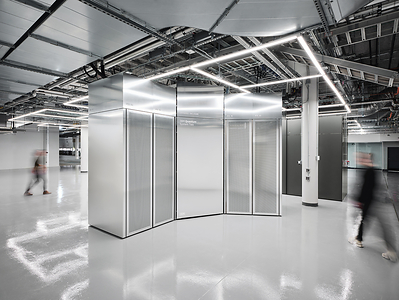
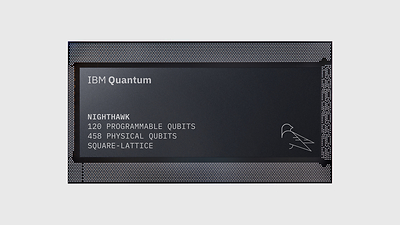
IBM will operate the IBM Quantum System Two, which will be powered by an IBM Quantum Nighthawk, the company's most advanced processor. ETH Zurich will provide expertise, resources and technologies for Swiss industries, startups and academia, including access to the quantum computer. Its delivery is expected to catalyze the development of new algorithms, technical breakthroughs, and industrial use cases, as well as anchor initiatives to foster Switzerland's workforce and talent. The project also advances the ongoing strategic collaboration between Lockheed Martin and IBM, combining Lockheed Martin innovations in quantum sensing and additive manufacturing with IBM's expertise in quantum computing and AI.
"Switzerland is deservedly recognized as a hub for global innovation, and Lockheed Martin is proud of its long history of technical collaboration within the country," said Dr. Craig Martell, Lockheed Martin vice president and chief technology officer. "This project extends the strategic relationship between Lockheed Martin and IBM in quantum and AI while positioning Switzerland as a leader in these critical, cutting-edge fields. It provides resources and expertise, develops skills and enables joint research across the Swiss commercial, defense and academic ecosystem."
"IBM has collaborated with institutions in Switzerland for almost 100 years. Our research team at our Zurich lab has led fundamental technology breakthroughs for the world and has been part of the country's science ecosystem for decades," said Alessandro Curioni, vice president, Algorithms and Applications, IBM Research and director of the Zurich Research Laboratory. "As we continue to foster innovation with the Swiss community, we are excited to have the opportunity to put world-class quantum hardware, software and expertise directly into the hands of Switzerland's thriving academic institutions and industries."
"Switzerland will gain access to essential research infrastructure that will enable us to further advance the exploration of this emerging technology and educate the talent needed to support it," said ETH Zurich President Joël Mesot, emphasizing the opportunities the new quantum computer will bring to Switzerland.
Delivering quantum to the Swiss ecosystem
Organizations that join the innovation hub through ETH Zurich will have immediate access to these resources and IBM's fleet of quantum computers available over the cloud. Additionally, upon the system's deployment by the end of 2026, ETH Zurich will provide organizations with access to Switzerland's own dedicated IBM Quantum System Two. These capabilities will enable the country's community of innovators to accelerate scientific and industrial research and build new use cases across chemistry, materials science, optimization, financial services and more. Today, IBM quantum computers are already delivering scientific value across the globe as useful tools in these fields.
IBM and Lockheed Martin expand joint research initiatives
As part of the collaboration, two planned joint development projects between IBM and Lockheed Martin include the exploration of quantum sensing applications for navigation and the improvement of additive manufacturing of metallic alloys. These projects also complement ongoing efforts by IBM and Lockheed Martin across a range of advanced technologies focused on aerospace and defense innovation.
IBM and ETH Zurich build on a legacy of collaboration
This initiative also builds upon a close and long-standing collaboration between IBM and ETH Zurich, including a recently launched 10-year effort to advance foundational algorithmic research.
The quantum education and workforce development effort includes providing the Swiss ecosystem with access to the IBM Quantum Network and IBM Quantum Platform learning offerings, including coursework, certifications, and workshops; as well as event support, such as hackathons, conferences, and partner forums.
About IBM
IBM is a leading provider of global hybrid cloud and AI, and consulting expertise. We help clients in more than 175 countries capitalize on insights from their data, streamline business processes, reduce costs and gain the competitive edge in their industries. Thousands of governments and corporate entities in critical infrastructure areas such as financial services, telecommunications and healthcare rely on IBM's hybrid cloud platform and Red Hat OpenShift to affect their digital transformations quickly, efficiently and securely. IBM's breakthrough innovations in AI, quantum computing, industry-specific cloud solutions and consulting deliver open and flexible options to our clients. All of this is backed by IBM's long-standing commitment to trust, transparency, responsibility, inclusivity and service.
Visit www.ibm.com for more information.
About Lockheed Martin
Lockheed Martin is a global defense technology company driving innovation and advancing scientific discovery. Our all-domain mission solutions and 21st Century Security® vision accelerate the delivery of transformative technologies to ensure those we serve always stay ahead of ready. More information at Lockheedmartin.com.
Media contacts:
Chris Nay
IBM Communications
cnay@us.ibm.com
Stephen Funk
IBM DACH Communications
+41-58 333 78 68
stephen.funk@ch.ibm.com
Trent Perrotto
Communications Director, Technology Transformation and Innovation, Lockheed Martin
trent.perrotto@lmco.com
O: 301-581-7005 | M: 321-272-8027

 View original content to download multimedia:https://www.prnewswire.co.uk/news-releases/ibm-lockheed-martin-announce-swiss-quantum-innovation-hub-at-eth-zurich-anchored-by-switzerlands-first-ibm-quantum-computer-302874482.html

Der hessische Ministerpräsident Boris Rhein (CDU) hat eine Neujustierung des Umgangs mit der AfD im Bundestag gefordert und damit eine innerparteiliche wie parlamentarische Grundsatzdebatte angestoßen. In einem Interview mit dem Magazin „Stern“ plädierte der CDU-Politiker dafür, der AfD die ihr nach dem üblichen Verteilungsschlüssel zustehenden Vorsitzendenposten in den Fachausschüssen des Bundestags nicht länger zu verwehren. „Die Partei ist gewählt, und so sollte man mit ihr auch umgehen“, sagte Rhein und verwies darauf, dass die AfD im hessischen Landtag und in anderen Länderparlamenten bereits Ausschussvorsitze innehat.
Im Bundestag verfügt die AfD wie die anderen Fraktionen über ein Vorschlagsrecht für bestimmte Ausschussvorsitze. Bisher scheiterte sie jedoch regelmäßig daran, dass ihre Kandidatinnen und Kandidaten bei den Wahlen in den Ausschüssen nicht die Unterstützung der Abgeordneten der übrigen Parteien erhielten und damit die nötigen Mehrheiten verfehlten. Eine Klage der AfD-Bundestagsfraktion vor dem Bundesverfassungsgericht blieb im September 2024 ohne Erfolg; Karlsruhe sah keinen Anlass, in das Verfahren der Ausschussbesetzungen einzugreifen. Politisch aber gewinnt die Frage durch Rheins Vorstoß neue Brisanz.
Rhein grenzt sich zugleich von einer inhaltlichen Annäherung an die AfD ab und lehnt ein Verbotsverfahren gegen die Partei ab. Er halte das vielzitierte Bild einer „Brandmauer“ für falsch, betonte der CDU-Landeschef. Für die Union gelte: „Wir grenzen uns klar von der AfD ab, aber wir grenzen die Partei nicht aus.“ Das müsse sich auch in der Parlamentsarbeit widerspiegeln. Anstelle juristischer Schritte warb Rhein dafür, die AfD politisch zu stellen: Die CDU müsse den Wählerinnen und Wählern „ein besseres Angebot machen“ und die „Deutungshoheit über die Alltagsfragen“ zurückgewinnen. Eine Zusammenarbeit mit der AfD setze aus seiner Sicht eine „Politik der klaren roten Linien“ voraus.
Die AfD bewertet die Äußerungen des hessischen Regierungschefs als Signal eines sich abzeichnenden Kurswechsels in der Union. Der Parlamentarische Geschäftsführer der AfD-Bundestagsfraktion, Bernd Baumann, sprach gegenüber der Nachrichtenagentur AFP von einem „überfälligen“ Schritt und einem Zeichen für ein „generelles Umdenken in der CDU“. Die Forderung nach Ausschussvorsitzen sei „nur der erste Schritt – weitere werden folgen“, prognostizierte Baumann. Angesichts jüngster Wahlergebnisse sehe er die Union unter Druck, ihre bisherige Ausgrenzungsstrategie zu überdenken. Koalitionsfraktionen im Bundestag wiesen einen von Rhein geforderten Kurswechsel allerdings zurück und halten bislang an der Linie fest, AfD-Kandidaten für Ausschussvorsitze nicht zu unterstützen.
In den Fachausschüssen des Bundestags wird ein Großteil der inhaltlichen Gesetzgebungsarbeit vorbereitet. Die Vorsitzenden spielen eine zentrale Rolle bei der Organisation der Beratungen und der Tagesordnungsgestaltung. Die Verteilung dieser Schlüsselpositionen erfolgt nach einem festgelegten Schlüssel zwischen den Fraktionen, doch bleibt die tatsächliche Besetzung an die Wahl durch die Ausschussmitglieder gebunden. Vor diesem Hintergrund berührt die von Rhein angestoßene Debatte nicht nur die Machtbalance zwischen den Fraktionen, sondern auch die Frage, wie das Parlament mit Parteien umgeht, die zwar demokratisch gewählt sind, von großen Teilen des Hauses aber weiterhin klar abgelehnt werden.




