IBM moves to third phase of DARPA's rigorous evaluation of approaches to building a fault-tolerant quantum computer
YORKTOWN HEIGHTS, N.Y., Oct. 7, 2026 /PRNewswire/ -- IBM (NYSE: IBM) today announced it has been selected for Stage C, the third phase of the Quantum Benchmarking Initiative (QBI) led by DARPA, the United States Defense Advanced Research Projects Agency. This phase will advance IBM through DARPA's verification process, in which independent experts extensively test and measure quantum hardware, technology, systems engineering, and architectures to determine if a company can build a fault-tolerant quantum computer.
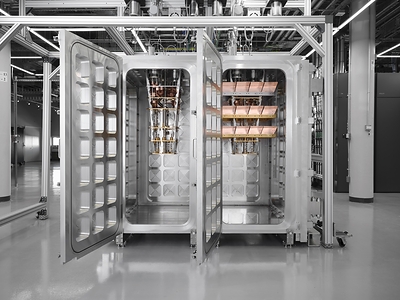
"Advancing to the third stage of DARPA's Quantum Benchmarking Initiative validates the strength of IBM's path to building a fault-tolerant quantum computer," said Jay Gambetta, Director of IBM Research and IBM Fellow. "IBM expects to deliver the first fault-tolerant system in 2029, and we plan to scale the value of quantum computing well beyond that timeline. We look forward to working with DARPA's team of experts as they advance their review of approaches to fault-tolerant quantum computing into the testing phase."
As an independent research and development arm of the U.S. Department of Defense, DARPA launched the QBI in 2024 to determine whether an industrially useful fault-tolerant quantum computer can be built by 2033. The program defines such a system as one whose computational value will exceed its cost. IBM has successfully progressed through the QBI's assessment process, including the first two stages that analyzed comprehensive R&D plans and risk mitigation approaches.
IBM has built the strongest quantum foundation in the industry, anchored by the largest fleet of quantum computers across the globe and Qiskit, the world's most popular quantum software. IBM's quantum computers are already being used today as scientific tools by a network of more than 340 organizations across financial services, healthcare, materials science, academia, and government as they build industrial applications and pursue algorithms to unlock the full potential of fault-tolerant quantum computing.
Last year, IBM laid out its plans to deliver the world's first fault-tolerant quantum computer, IBM Quantum Starling. Starling will combine advances in error correction, processor design, systems engineering, and more. Since then, IBM's progression has remained on course, including the demonstration of core hardware components for fault tolerance and breakthroughs in efficient error correction decoding.
Advancing to Stage C
Each successful QBI performer has progressed through three stages of the program thus far:
Alongside its participation in QBI, IBM continues to collaborate with partners across industry, government, and academia to accelerate the timeline toward fault-tolerant quantum computing.
For more information about the Quantum Benchmarking Initiative, visit the DARPA website.
About IBM
IBM is a leading global hybrid cloud and AI, and business services provider, helping clients in more than 175 countries capitalize on insights from their data, streamline business processes, reduce costs and gain the competitive edge in their industries. Thousands of governments and corporate entities in critical infrastructure areas such as financial services, telecommunications and healthcare rely on IBM's hybrid cloud platform and Red Hat OpenShift to affect their digital transformations quickly, efficiently and securely. IBM's breakthrough innovations in AI, quantum computing, industry-specific cloud solutions and business services deliver open and flexible options to our clients. All of this is backed by IBM's legendary commitment to trust, transparency, responsibility, inclusivity and service.
For more information, visit https://research.ibm.com.
Media contacts:
Erin Angelini
IBM
edlehr@us.ibm.com
Chris Nay
IBM
cnay@us.ibm.com

 View original content to download multimedia:https://www.prnewswire.co.uk/news-releases/ibm-advances-to-stage-c-of-darpa-quantum-benchmarking-initiative-302901682.html

Im Magdeburger Landtag steht ein Einschnitt in der bundesdeutschen Parlamentsgeschichte bevor: Erstmals könnte ein Abgeordneter der AfD das Amt des Landtagspräsidenten übernehmen. Der 35-jährige Tobias Rausch, seit 2016 Mitglied des Landtags von Sachsen-Anhalt und Generalsekretär der AfD im Bundesland, geht mit einer komfortablen Mehrheit in die konstituierende Sitzung. Nach ihrem klaren Wahlsieg stellt die AfD künftig 39 der 83 Abgeordneten und ist damit die mit Abstand stärkste Fraktion.
Den entscheidenden Schub liefert das Bündnis mit dem Bündnis Sahra Wagenknecht (BSW). Die fünf BSW-Abgeordneten wollen geschlossen für Rausch stimmen und kommen gemeinsam mit der AfD auf 44 Stimmen. BSW-Fraktionschef Thomas Schulze verweist auf parlamentarische Gepflogenheiten: Als stärkste Fraktion habe die AfD laut Geschäftsordnung Anspruch auf den Vorsitz im Parlament. Eine politische Blockbildung gegen die AfD lehnt Schulze ab und präsentiert die Zustimmung zur Wahl des Landtagspräsidenten als Signal eines „neuen Politikstils“.
Die übrigen Fraktionen reagieren gespalten. CDU, SPD, Grüne und Linke verfügen zusammen ebenfalls über 39 Mandate, treten aber nicht geschlossen gegen die AfD an. Die CDU hat angekündigt, sich bei der Wahl zu enthalten – Enthaltungen zählen in diesem Verfahren nicht als abgegebene Stimmen. SPD, Grüne und Linke wollen gegen Rausch stimmen. Spannend bleibt damit vor allem die Frage, ob der AfD-Kandidat über die absehbaren 44 Ja-Stimmen hinaus zusätzliche Unterstützung erhält. Vor der geheimen Abstimmung spekulieren die Lager bereits über mögliche Abweichler; aus der AfD-Spitze heißt es, zusätzliche Stimmen könnten auch aus dem Kreis der erklärten Gegner stammen.
Parallel zur Präsidentenwahl testet die AfD aus, wie weit ihr neuer Einfluss im Landtag reicht. Die Fraktion will die Geschäftsordnung ändern, um neben dem Präsidenten auch einen der drei Vizepräsidentenposten zu besetzen – vorgesehen ist der Abgeordnete Hans-Thomas Tillschneider. In der Vergangenheit sorgten seine Beiträge zur Bildungs- und Kulturpolitik regelmäßig für Kritik in anderen Fraktionen, die den Personalvorschlag daher als Provokation werten dürften. Ob das BSW diese Personalie ebenso mitträgt wie die Wahl von Rausch, ist bislang offen. Unabhängig vom Ausgang der Abstimmungen wird die erste Sitzung des neu gewählten Landtags damit zum Testfall für künftige Zusammenarbeit und Machtarithmetik in Sachsen-Anhalt.




