US$10 Billion in Venture Capital Convenes to Meet Start-ups
Government, Business and Young Professionals Explore Opportunities in the New Economy
Click here to high-resolution photo
HONG KONG, Oct. 6, 2026 /PRNewswire/ -- Organized by Hong Kong Youth Professional Global Advocacy, the third Global Youth Powerhouse Summit convened over 600 in-person attendees and participants from 60+ countries at Conrad Hong Kong. Aligning with the HKSAR's First Five-Year Plan (2026–2030) and latest Policy Address, the summit brought together leaders and young professionals to address AI, geopolitics, education, capital markets, life technology, and start-up financing. Across three editions, it has reached 17,000+ online participants across 30+ countries and regions with a social media reach exceeding 50 million.
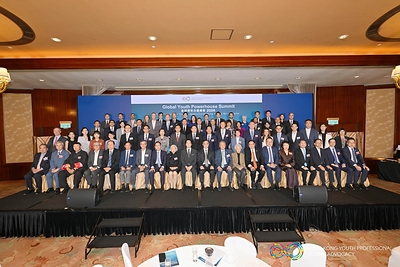
In a pre-recorded video address, The Chief Executive of the HKSAR, Mr John Lee, GBM, SBS, PDSM, PMSM, encouraged young talent to seize emerging opportunities, affirming the government's commitment to building platforms for youth to thrive locally, nationally, and globally. Delivering the opening keynote, The Deputy Secretary for Justice of the HKSAR, Dr Cheung Kwok-kwan, SBS, JP, highlighted GBA integration, urging young professionals to serve as "super-connectors" and "super value-adders" helping Mainland enterprises go global. Dr Kevin Lau, MH, Founding Convenor of Hong Kong Youth Professional Global Advocacy, highlighted that venture funds managing US$10 billion gathered to support Hong Kong's next generation, emphasizing that while AI assists technology and healthcare, human care remains irreplaceable.
Other distinguished guests included Mr Kevin Choi, JP, Permanent Secretary for Innovation, Technology and Industry; Professor Frederick Ma, GBS, JP, Chairman of the Hong Kong Trade Development Council; Ms Bonnie Y Chan, JP, CEO of HKEX; and Mr James Chau, President of CUSEF and WHO Goodwill Ambassador. Mr Bryan Che, Chief Strategy Officer of Huawei, and Ms Cindy Chow, Executive Director and CEO of Alibaba Hong Kong Entrepreneurs Fund, also attended in person to exchange views with young professionals.
Six panel discussions addressed key pillars of Hong Kong's economic future: artificial intelligence, geopolitics, education, capital markets, life and health technology, and start-up financing. Panellists explored AI implementation, human-centric diplomacy, Asia's education hub, asset tokenization, and healthcare innovation. The summit concluded with a pitching session connecting 15 start-ups with 11 venture funds managing US$10 billion, reaffirming its commitment to linking young talent with global leaders.
Official hashtag: #GYPS2026
Social media: Instagram @gypowerhouse; Facebook @hkyproadvocacy
Click here to check the guest list
 View original content to download multimedia:https://www.prnewswire.co.uk/news-releases/global-youth-powerhouse-summit-2026-concludes-successfully-302899552.html

Die Innenministerkonferenz (IMK) der Länder hat ihr seit 1954 praktiziertes Einstimmigkeitsprinzip aufgegeben und setzt künftig auf Mehrheitsentscheidungen. Beschlüsse gelten nun als gemeinsame Linie der Länder, wenn mindestens 13 der 16 Innenministerinnen und Innenminister zustimmen. Die Neuregelung wurde nach Angaben eines Sprechers des Gremiums im schriftlichen Umlaufverfahren beschlossen und gilt ab sofort.
Auslöser für den Kurswechsel ist die Möglichkeit, dass in kommenden Landesregierungen die AfD das Innenressort übernehmen könnte. In Sachsen-Anhalt hatte ihr Spitzenkandidat Ulrich Siegmund zuletzt erklärt, er wolle sich im Dezember zum Ministerpräsidenten wählen lassen – ein Schritt, der eine Regierungsbildung mit AfD-Beteiligung als realistische Option erscheinen lässt. Nach der bisherigen Praxis hätte ein Land mit einem AfD-Innenminister im Zweifel IMK-Beschlüsse blockieren können.
Mit der Abkehr von der Einstimmigkeit wollen die übrigen Länder nach übereinstimmenden Angaben verhindern, dass ein einzelnes Ressort – unabhängig von der parteipolitischen Farbe – zentrale Positionierungen in Fragen der inneren Sicherheit ausbremst. Bislang sollte die Einstimmigkeit sicherstellen, dass kein Land bei sensiblen Themen überstimmt wird; ein Veto oder auch eine Enthaltung konnten Beschlüsse stoppen, abweichende Positionen wurden im Protokoll dokumentiert. Künftig soll bereits eine breite, aber nicht mehr vollständige Zustimmung als ausreichend gelten, um einen länderübergreifenden Standpunkt zu formulieren.
Formal bleibt die IMK ein informelles Gremium ohne gesetzliche Grundlage. Sie ist weder im Grundgesetz noch in Bundes- oder Landesgesetzen verankert und verfügt über keine geschriebene Geschäftsordnung. Gleichwohl entfalten ihre Beschlüsse beträchtliche Wirkung, weil sie in den Ländern politisch aufgegriffen und umgesetzt werden. Mit der nun eingeführten Mehrheitsregel verschiebt sich das Machtgefüge innerhalb dieser Runde: Konsens bleibt möglich, ist aber nicht mehr Voraussetzung dafür, dass die Innenminister gemeinsam handeln.




